HONGWUMACHINERY Request a QuoteGet a quote ↗
Home / Products / HGF-300-P
HGF-300-P
Dry Lamination

HGF-300-P

Standard dry laminating machine.

Review the specifications below, then contact our team to confirm the configuration for your materials and production goals.

Request Technical Information ↗
Equipment overview

Understand the process and configuration.

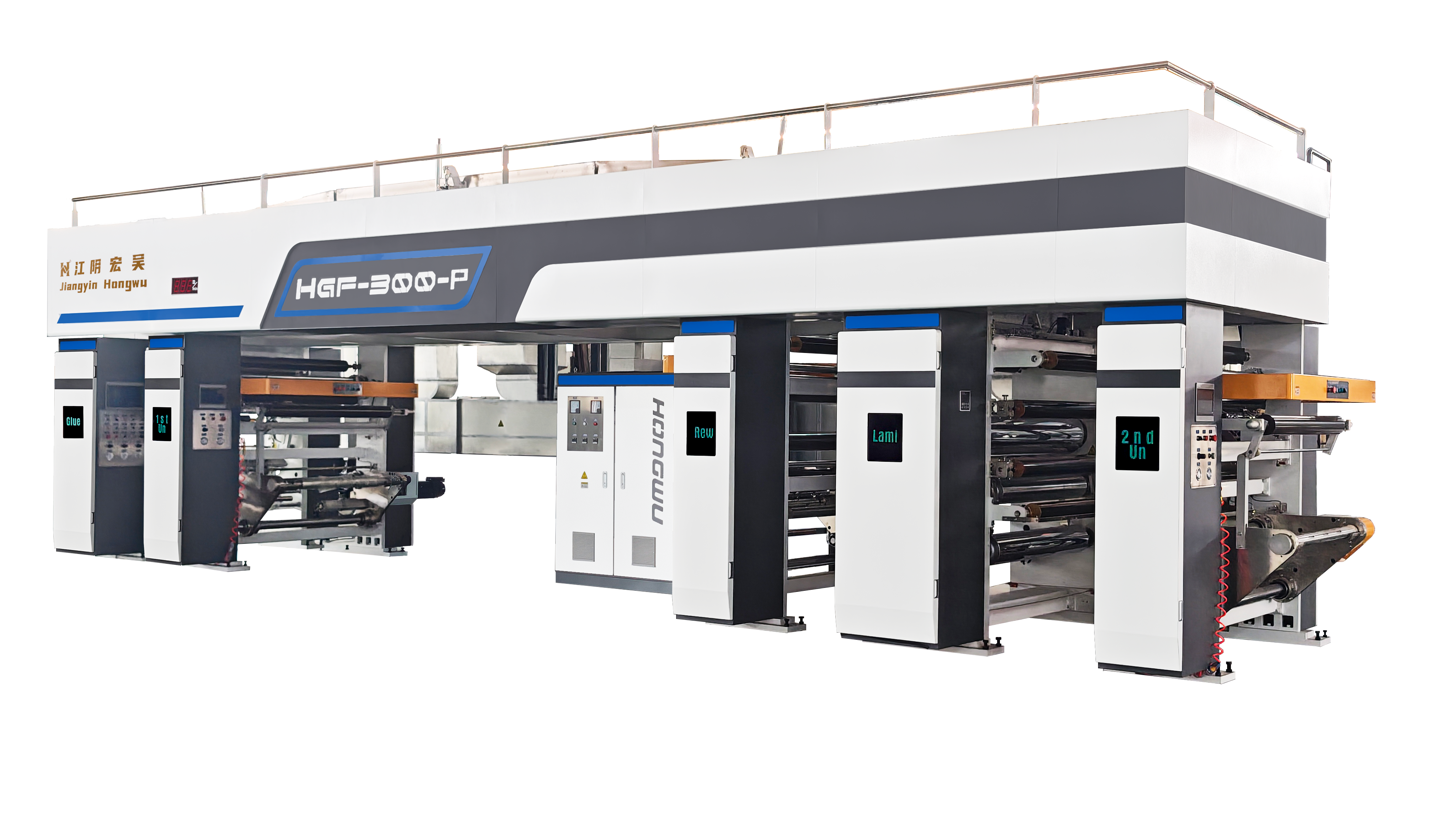
HGF-300-P is the standard model in Hongwu's dry laminating machine range, independently developed and manufactured by our company. It is suitable for coating and laminating a wide range of substrates, including aluminium foil, PET, PE, nylon, OPP, CPP and other plastic films, as well as paper. The machine can operate at speeds of up to 300 m/min, whilst maintaining excellent tension control and stability even at high speeds. Furthermore, the machine offers significant advantages such as low solvent residue, low energy consumption, stable tension control and a wide range of applications. The overall design balances high performance with energy efficiency and environmental protection, meeting the modern packaging industry’s demands for efficiency and quality.

Compare roll changes on the P and K models

Comparison HGF-300-P Standard HGF-300-K Dual station
Roll change Stop the line Automatic splicing without stopping the line
Best suited to Small batches with frequent product changeovers Long runs through multiple rolls of the same specification

On short runs, frequent setup and adjustment can limit the overall productivity gain from automatic splicing.

Two questions before choosing. How many rolls do you run per specification? How long does each stopped roll change take?

Material compatibility

Confirm the substrate and finished material structure for your application.

Production requirements

Review width, output targets and operating conditions before comparing models.

Configuration review

Discuss controls, heating and handling requirements with the equipment team.

Inside the HGF-300-P

Follow the process.
Explore the machine.

Select a numbered point to see how each station contributes to lamination quality.

Front view of the HGF-300-P with coating and primary unwind at the left, the dryer above, and rewind, lamination and secondary unwind at the right.

On a phone, swipe the machine view or use the station buttons below.

01 / Primary unwind

A stable start for the coated web.

The primary unwind feeds the substrate to be coated. In the coffee-pouch case, PET receives the adhesive during the first pass.

What to watch

Review web tension during acceleration and as the roll diameter changes. The aim is stable transport without unnecessary stretch.

Explore tension control ↗
02 / Adhesive coating

Uniform coverage before drying.

The coating station meters adhesive onto the web. Printed areas and surface texture affect the coverage needed for a consistent bond.

What to watch

Check dry adhesive coat weight, wetting and printed recesses. Fine white spots can point to several causes; coat weight alone is not a diagnosis.

Read the white-spot investigation ↗
03 / Hot-air drying

Remove solvent before lamination.

Hot air dries the coated web before it meets the second substrate. A rising temperature profile helps manage evaporation along the oven.

What to watch

Review zone temperatures, airflow, exhaust and line speed together. Excessive first-zone heat can skin the adhesive and trap solvent inside.

Trace the hot-air reuse path ↗
04 / Secondary unwind

Handle foil and PE differently.

The second substrate joins the dried, coated web at the nip. The coffee-pouch case uses thin foil in the first pass and PE in the second.

What to watch

Thin foil tolerates very little elongation; PE stretches readily. Excessive unwind tension can leave stress that later appears as wrinkles, tunnels or curl.

Compare PET, foil and PE ↗
05 / Laminating nip

Bring the two webs into contact.

The laminating nip brings the coated and secondary webs together. Stable alignment and consistent contact help the adhesive wet the interface.

What to watch

Investigate trapped air, uneven contact and adhesive coverage when bubbles appear. Compare the laminate immediately after the nip and after curing.

Explore defect checks ↗
06 / Rewind

Keep the finished roll consistent.

The rewind collects the laminate after the nip. Roll build is part of process quality, alongside the bond and appearance of the material.

What to watch

Review winding tension, roll edges and roll firmness across the run. Inspect again after curing to distinguish immediate defects from delayed stress release.

Read the staged speed trial ↗
Technical data

Equipment specifications

Parameter Specification
ModelHGF-300-P
Working width1250 (mm)
Operating speed300 (m/min)
Unwind/Rewind diameterΦ800 (mm)
Oven length9000 (mm)
MaterialPlastic Film(PET, BOPP, BOPA, PE, etc.), Paper, Al Foil and other reel

Working width can be customized; listed widths are reference configurations. Confirm the current configuration and technical data sheet with our team before ordering.

Finished product gallery

What this equipment produces

Discuss this equipment with our team.

Share your material and process requirements.

Inquire About This Equipment ↗
Equipment overview